
Why Allergy Seasons Are Getting Longer — And What's Happening in Your Body

Quick answer
Allergy seasons have lengthened by approximately 20 days since 1990, with pollen concentrations rising by roughly 21%, according to research published in Proceedings of the National Academy of Sciences. Warmer temperatures extend the freeze-free window, giving plants more time to grow, bloom, and release pollen. The result: your immune system faces a longer, heavier exposure load each year — and your body's histamine response is working overtime to keep up.

In This Article
The Numbers: How Much Has Allergy Season Changed?
The research is clear on the scale of change. Here are the key data points:
Season length. A 2021 study published in Proceedings of the National Academy of Sciences analyzed pollen data across North America and found that pollen seasons have lengthened by approximately 20 days since 1990. Human-caused warming accounted for roughly half of that shift.
Pollen volume. The same study found pollen concentrations increased by approximately 21% over the same period. More days of pollen, and more pollen per day.
City-level data. Climate Central's 2025 analysis of NOAA temperature records found that 172 out of 198 U.S. cities now have a longer freeze-free season — an average of 20 additional days compared to 1970. Seventy cities gained at least three full weeks.
Ragweed specifically. EPA data tracking ragweed pollen from 1995 to 2015 found the season lengthened at 10 out of 11 monitoring locations in the central U.S. and Canada. Northern sites were hit hardest: Winnipeg gained 25 additional days of ragweed pollen. Fargo gained 21.
Projections. A 2022 study in Nature Communications modeled what comes next: under high-emission scenarios, spring pollen could start 10 to 40 days earlier by end of century, with total annual pollen emissions rising 16 to 40 percent from warming alone. When the fertilization effect of rising CO₂ on plant growth is included, that number climbs substantially higher.
This isn't annual variation — it's a structural shift in how long and how intensely your immune system is being asked to respond each year.
It's Not Just More Pollen — It's Stronger Pollen
Here's what most articles about longer allergy seasons leave out: the pollen itself is changing.
Plants grown under higher CO₂ concentrations don't just produce more pollen. They produce pollen with a higher concentration of the allergenic proteins on the grain's outer surface. These are the proteins your immune system recognizes and reacts to. More protein per grain means each individual pollen particle carries a stronger immunological signal.
Air quality plays a role too. Pollutants like ozone and diesel particulates interact with pollen grains and alter their surface composition, making them more immunoreactive. In urban environments especially, the pollen floating through the air is not the same pollen your parents dealt with 30 years ago.
The practical takeaway: it's not just about more days of exposure. Each day of exposure may be carrying a heavier immunological punch than it used to. Your body is being asked to process more pollen, more potent pollen, for more weeks per year.
What This Means for Your Workouts
In the world of kinesiology, we talk a lot about recovery being just as important as the movement itself. If you're constantly inhaling pollen grains during an outdoor workout at peak season, your body spends its energy on a massive inflammatory response instead of repairing your muscles post-exercise. Here are a few tips:
Check the pollen forecast. Don't rely on the old "mornings are worst" rule — a 2022 study in the Annals of Allergy, Asthma & Immunology found pollen counts are actually lowest from early morning through noon, peaking in the afternoon and evening. Morning workouts may give you the cleanest air window.
The 15-Minute Rule. If you start your outdoor workout and feel your chest tightening or your heart rate spiking higher than usual for your pace, pull the plug. Your body is telling you it's overtaxed.
Post-Move Protocol. If you do go outside during peak season, strip your workout gear in the laundry room and hop straight in the shower.
Strategic Indoor Swaps. Save your high-intensity intervals and heavy leg days for the gym where the air is filtered. Use your outdoor time for lower-intensity recovery walks when the counts are lower.
What Happens Inside Your Body During a Longer Pollen Season
This is where most coverage of longer allergy seasons stops: more pollen simply equals worse symptoms. But we should also consider what's happening at the cellular level.
When pollen enters your system, your immune system's first responders — mast cells — recognize those proteins and begin to degranulate. This process releases histamine and other inflammatory markers like tryptase into your tissue. Histamine isn't a villain. It's a vital signaling molecule for things like stomach acid and brain function. The challenge is one of volume and clearance.
Our bodies rely on enzymes like DAO and HNMT to break histamine down, but these systems have a finite processing capacity. When the inflow from weeks of pollen exposure exceeds that outflow, the system starts to overflow.
This is where mast cell priming comes in. Research suggests that repeated exposure doesn't just cause a daily reset. Mast cells may become progressively more sensitive as the season drags on. Nasal challenge studies have pointed toward a type of cellular memory or hyperreactivity that lingers even after the pollen is gone (Orban et al., Clinical & Experimental Allergy, 2020).
A 20-day-longer season isn't just more of the same. It could represent a window of progressive sensitization. By the time you hit the final weeks of a modern, extended season, your system may be operating at a much higher baseline of reactivity than it was at the start.
"The research on mast cell priming suggests it's not just about one bad day — it's about the cumulative burden over time that influences how your body will respond." — Kacey Moe, MS Holistic Nutrition
Why Some People React Worse Than Others
Two people living in the same city, breathing the same air, can have radically different allergy seasons. This is not just about genetics — though genetics play a role. It's about total histamine processing capacity.
Think of your body's histamine system as a bucket with multiple inputs and limited drainage:
Inputs (what fills the bucket):
- Pollen-triggered mast cell activation (the environmental load we've been discussing)
- Dietary histamine from food (aged cheese, fermented foods, alcohol — see our low-histamine diet guide)
- Gut bacteria that produce histamine as a metabolic byproduct
- Hormonal shifts (estrogen promotes histamine release, which is why many women notice symptoms worsen premenstrually)
- Stress, sleep deprivation, and inflammatory triggers
Drainage (what empties the bucket):
- DAO enzyme activity in the gut
- HNMT enzyme activity in the liver and brain
- Methylation capacity (HNMT requires methylation to function)
When drainage is strong, you can handle a heavy pollen season without overflowing. When drainage is compromised — through DAO variants, gut lining damage, methylation bottlenecks, or nutrient deficiencies — a longer season pushes you past the threshold faster.
This is why the same person can tolerate spring pollen one year and be miserable the next. The pollen didn't change that much. But something else shifted — gut health, stress levels, sleep quality, hormonal status — and the bucket was already closer to full when pollen season started.
Our immune systems are dynamic, not static. They're constantly recalibrating based on stress levels, gut health, and environment. Over time, things like hormonal shifts or changes in your microbiome can lower your threshold, making you reactive to things you used to tolerate fine.
As a movement specialist, I see this as a load issue: when you combine a new environment with a body that's already managing internal stress, your system can hit a tipping point where it starts treating harmless triggers like threats. It's not that you're suddenly broken — it's that your cumulative biological bucket has finally started to overflow.
Supporting Your System Through a Longer Season
There's an important distinction between suppressing symptoms and supporting the system that's producing them.
Antihistamines block histamine receptors. They don't reduce the amount of histamine your body is producing or improve your body's ability to clear it. For a 4-week season, that's often enough. For an 8-week season with progressively primed mast cells, the gap between what your body is producing and what a receptor blocker can handle gets wider.
Here's what the research points to for supporting the underlying system:
1. Support mast cell stability. Quercetin, a plant flavonoid, has been shown to inhibit inflammatory cytokine release from human mast cells — in one study, more effectively than cromolyn sodium, the standard pharmaceutical mast cell stabilizer (Weng et al., PLoS ONE, 2012). Stabilizing mast cells reduces the volume of histamine released in the first place.
2. Support histamine clearance pathways. NAC supports glutathione production, your body's primary antioxidant and a key player in managing the oxidative stress that comes with sustained immune activation. Methylation support (B vitamins, folate) keeps HNMT functioning efficiently.
3. Reduce total histamine load. During peak season, a low-histamine diet reduces one major input into the bucket. This gives your DAO and HNMT enzymes more capacity to handle the pollen-driven load.
4. Address the gut. A significant portion of your DAO enzyme activity lives in your gut lining. If gut barrier function is compromised, DAO production drops and dietary histamine that should be neutralized in the gut enters circulation. The gut-histamine connection is often the missing piece.
5. Time your support. Start before symptoms appear. Mast cell priming is cumulative — building up your system's capacity before the season starts is more effective than catching up after week 4. Nasal steroid sprays, when used, require 2-3 weeks of daily use to reach full effect.
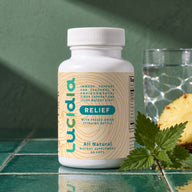
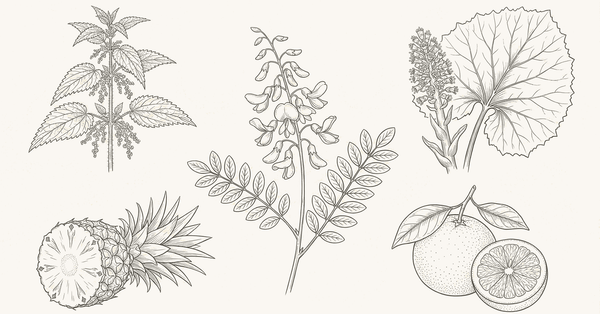
This is the approach behind formulas like Lucidia, which combines quercetin, NAC, stinging nettle (shown to act as an H1 receptor antagonist and mast cell tryptase inhibitor), reishi, and bromelain — five compounds that work across multiple points in the histamine pathway rather than blocking a single receptor.
When to See a Specialist
Not everything that looks like worsening allergies is pollen-related.
If your symptoms are year-round rather than seasonal, if they're worsening rapidly, or if over-the-counter approaches aren't making a dent after 2-3 weeks of consistent use, it's worth working with an allergist or immunologist. Allergy testing can identify specific triggers, and immunotherapy (allergy shots or sublingual tablets) can retrain the immune response over time.
Also worth noting: since 2020, many people have noticed significant changes in their immune reactivity. Post-viral immune shifts are real and can alter how your body responds to previously tolerable environmental triggers. If your allergy pattern changed markedly after a respiratory illness, that's worth mentioning to your provider.
The goal is not to suppress every symptom. It's to understand what your body is actually responding to, and support the system doing the responding.
Co-Founder & Wellness Director
MS Holistic Nutrition, BS Kinesiology. Specializes in functional nutrition, somatic practice, and women’s health. Co-founder of the REN School of Consciousness.
Continue reading
All histamine articles →-
 Start here
Histamine and immune intelligence: the guide
Every histamine article, in reading order. Nathalie Babazadeh, L.Ac. and Kacey Moe, MS -
 Histamine and mast cells
Why Your Histamine Response Spikes Every Spring
Artemis Therapeutics · 4 min -
 Histamine and mast cells
Antihistamine Herbs: 5 Practitioner-Tested Options (Research-Backed)
Artemis Therapeutics · 9 min
Not sure where to start? Take the 3-minute quiz
Get new articles by email
New articles from Nathalie and Kacey. Unsubscribe anytime.

Lucidia
Daily histamine support, formulated by Nathalie and Kacey in their practice in 2009. Same five ingredients since.
★ 4.3 out of 5 stars from · 238 reviewsQuercetin, NAC, reishi, bromelain, nettle
$29.99Free shipping · 60 capsules
Subscribe and save 10%