
The DAO Enzyme: Why Some People Can't Break Down Histamine
Quick answer
Diamine oxidase (DAO) is the enzyme in your gut lining that breaks down histamine from food before it enters your bloodstream. When DAO activity is low — from genetics, gut damage, medications, or nutrient deficiencies — dietary histamine accumulates and triggers symptoms across multiple systems.

In This Article
There is a question worth returning to when looking at histamine intolerance: why can one person eat aged cheese and drink red wine without issue, while the person next to them gets a migraine from a single bite of leftover salmon?
The answer, in many cases, is DAO.
Diamine oxidase is an enzyme that sits in the lining of your small intestine and breaks down histamine from food before it can cross into your bloodstream. When DAO activity is adequate, dietary histamine is neutralized in the gut. When DAO activity is low, histamine passes through the intestinal wall intact, enters circulation, and activates receptors throughout the body.
This is not a fringe theory. It is a well-characterized enzyme deficiency with measurable lab markers and identifiable genetic underpinnings. The issue is that most conventional practitioners do not test for it.
How DAO Works
DAO belongs to a class of enzymes called copper-containing amine oxidases. It catalyzes the oxidative deamination of histamine, breaking it into imidazole acetaldehyde and then imidazole acetic acid, which are inactive and easily excreted (Maintz & Novak, 2007).
The enzyme is produced primarily in the epithelial cells of the small intestine, with smaller amounts in the kidneys, placenta, and thymus. The intestinal location is by design: DAO intercepts dietary histamine at the point of absorption, before it ever reaches the bloodstream.
DAO requires three cofactors to function:
- Vitamin B6 (pyridoxal phosphate / P5P) — directly involved in the catalytic mechanism
- Copper — part of the enzyme's active site
- Vitamin C — supports DAO activity and independently degrades histamine
If any of these cofactors are deficient, DAO activity drops even if the enzyme itself is being produced in normal quantities. This is one of the most correctable causes of low DAO and where practitioners usually start when working through histamine problems.
The Two Histamine Breakdown Pathways
Your body has two main systems for metabolizing histamine. Understanding both clarifies why DAO supplementation alone is sometimes insufficient.
| DAO | HNMT | |
|---|---|---|
| Full name | Diamine oxidase | Histamine N-methyltransferase |
| Where it works | Outside cells — gut lumen, interstitial space | Inside cells — liver, brain, kidneys |
| Primary role | Breaks down dietary histamine before absorption | Methylates intracellular histamine for excretion |
| Key cofactors | Vitamin B6, copper, vitamin C | SAMe (from the methylation cycle) |
| What reduces it | Gut damage, AOC1 gene variants, medications, alcohol | Poor methylation, liver congestion, HNMT gene variants |
| Supplement support | DAO cofactors, porcine DAO supplements | NAC (glutathione), methylation B vitamins |
If DAO is low, more dietary histamine enters the bloodstream. If HNMT is slow (due to poor methylation, liver congestion, or genetic variants), histamine that makes it into cells is not cleared efficiently either. When both pathways are compromised, histamine accumulates from both dietary and internal sources.
This is why NAC (which supports liver glutathione for HNMT-related clearance) and DAO cofactors (which support gut-level breakdown) address different parts of the same problem.
Two histamine clearance pathways
Histamine from food
Aged cheese, wine, fermented foods, leftovers, cured meats
DAO in gut lining
Breaks down histamine before absorption. Requires B6, copper, vitamin C.
Histamine that gets through
Enters bloodstream and tissues — activates H1, H2, H3, H4 receptors
HNMT in liver and cells
Methylates intracellular histamine for excretion. Requires SAMe + glutathione.
Why DAO Activity Drops
Genetic Factors
The AOC1 gene encodes the DAO enzyme. Several single-nucleotide polymorphisms (SNPs) in AOC1 have been associated with reduced DAO activity and increased susceptibility to histamine intolerance. The most studied variants are rs10156191, rs1049742, and rs1049793 (Comas-Basté et al., 2020).
These polymorphisms do not guarantee histamine intolerance. They indicate a genetic predisposition that may become clinically relevant when combined with other factors (gut damage, nutrient deficiencies, medication use).
Genetic testing for AOC1 variants is available through most functional genomics panels and can help contextualize symptoms.
Gut Lining Damage
DAO is produced in the enterocytes (intestinal lining cells) of the small intestine. Anything that damages or inflames the intestinal lining can reduce DAO production:
- Celiac disease and gluten sensitivity
- Inflammatory bowel disease (Crohn's, ulcerative colitis)
- Small intestinal bacterial overgrowth (SIBO)
- Intestinal infections (parasites, bacterial pathogens)
- Chronic NSAID use (NSAIDs damage the gut lining directly)
- Food sensitivities causing chronic intestinal inflammation
This creates a feedback loop: gut inflammation reduces DAO, reduced DAO allows more histamine through, and histamine itself promotes further gut inflammation. Breaking this cycle often requires addressing the gut condition first, not just supplementing DAO.
Key takeaway
Gut inflammation and DAO deficiency create a self-reinforcing loop: inflammation reduces DAO, low DAO lets histamine through, and histamine drives more inflammation. Breaking this cycle means treating the gut condition, not just supplementing DAO.
Medications That Block DAO
Several common medications inhibit DAO activity. The irony is that some of them are prescribed for conditions that histamine intolerance mimics:
| Medication Class | Examples | How It Affects DAO |
|---|---|---|
| NSAIDs | Ibuprofen, aspirin, diclofenac | Directly inhibit DAO enzyme activity |
| H2 blockers | Famotidine, ranitidine | Block one histamine receptor but suppress DAO. Helpful short-term, counterproductive long-term for some |
| Antidepressants | Amitriptyline, MAOIs | Inhibit DAO and compete for same metabolic pathways |
| Antibiotics | Isoniazid, clavulanic acid | Directly inhibit DAO |
| Anti-nausea | Metoclopramide | Inhibits DAO activity |
If you are taking any of these and experiencing symptoms consistent with histamine intolerance, the medication may be part of the picture. Do not stop medications without consulting your prescriber, but the connection is worth discussing.
Alcohol
Alcohol inhibits DAO directly, delivers exogenous histamine (especially in red wine and beer), and triggers mast cells to release additional histamine. This triple mechanism is why alcohol is the most frequently reported trigger among people with histamine issues. Nathalie has written about this in detail in the wine and histamine post.
Testing DAO
Serum DAO
A blood test measuring circulating DAO levels. Normal ranges vary by lab, but values below 10 U/mL are generally considered low. The limitation: serum DAO fluctuates throughout the day and with meals, so a single measurement is a snapshot, not a complete picture.
Genetic Testing
AOC1 polymorphism testing through companies like 23andMe (raw data analysis), Strategene, or clinical genomics panels. This tells you about genetic predisposition, not current enzyme activity.
Functional Assessment
The most practical diagnostic tool remains a 2-4 week low-histamine diet. If symptoms improve on the elimination and return with reintroduction, that is strong functional evidence that histamine metabolism is compromised, and DAO is the most likely bottleneck.
A food and symptom diary tracking reactions within 30-60 minutes of meals is also useful. DAO-mediated reactions tend to be dose-dependent and time-correlated with high-histamine meals. If you can eat a small amount of aged cheese without issues but a large portion triggers symptoms, that pattern is consistent with a DAO capacity threshold being exceeded.
Supporting DAO
Cofactor Optimization
Start here. Before adding a DAO supplement, make sure the enzyme has what it needs to work:
- Vitamin B6 (as P5P): 25-50 mg daily. P5P is the active form and does not require liver conversion. Some people with compromised liver function cannot convert pyridoxine (the inactive form) to P5P efficiently.
- Copper: 1-2 mg daily. Copper is a less commonly discussed cofactor but is part of DAO's active site. Do not megadose — copper and zinc compete for absorption, so supplementing one can deplete the other.
- Vitamin C: 500-1,000 mg daily. Supports DAO activity and independently degrades histamine through a separate mechanism (Johnston et al., 1996).
DAO cofactor support — dosage reference
Vitamin B6 (as P5P)
25 - 50 mg/day
Active form. Does not require liver conversion. Part of DAO's catalytic mechanism.
Copper
1 - 2 mg/day
Part of DAO's active site. Do not megadose — competes with zinc for absorption.
Vitamin C
500 - 1,000 mg/day
Supports DAO activity and independently degrades histamine.
DAO Supplements
Supplemental DAO (derived from porcine kidney) is taken 15-20 minutes before meals to boost histamine-degrading capacity in the gut. It works locally and does not raise systemic DAO levels. Think of it as borrowing extra enzyme activity for that specific meal.
DAO supplements are a management tool, not a fix. They compensate for low endogenous DAO but do not address why DAO is low in the first place. For long-term resolution, the focus should be on restoring the gut lining where DAO is naturally produced, correcting nutrient deficiencies, removing DAO-blocking medications when possible, and treating underlying gut conditions.
Mast Cell Stabilization
If mast cells are overactive, they are dumping histamine into your system from the inside, independent of what you eat. DAO only handles extracellular and dietary histamine. If a significant portion of your histamine load is coming from internal mast cell release, DAO supplementation alone will not resolve symptoms.
This is where quercetin (mast cell stabilizer) and NAC (glutathione support for HNMT clearance) add value. They address histamine at the source (mast cells) and through the intracellular clearance pathway (HNMT), which DAO does not reach.
Gut Repair
If gut lining damage is reducing DAO production, repairing that lining restores the body's ability to produce its own DAO. This may involve treating SIBO or dysbiosis, removing food triggers, supporting mucosal healing with nutrients like L-glutamine and zinc carnosine, and restoring a healthy microbiome with histamine-safe probiotic strains.
The Bigger System
DAO is one enzyme in a larger metabolic network. It connects to the methylation cycle through HNMT and SAMe, to liver detoxification through glutathione, and to the gut lining where it is produced. Mast cells add another layer: when they are overactive, the histamine they release internally bypasses DAO entirely.
Isolating DAO as "the problem" and supplementing it without investigating why it is low is like treating a check engine light by covering it with tape. The light goes off, but the engine problem remains.
Key takeaway
DAO supplementation manages symptoms, but long-term resolution requires asking why DAO is low: gut lining damage, nutrient deficiencies, medications, or genetic variants. Fix the root cause, and the body restores its own DAO production.
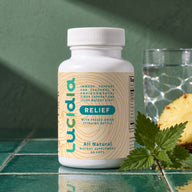
The more complete approach: support DAO with cofactors, stabilize mast cells to reduce internal histamine production, support liver clearance through the glutathione pathway, and heal the gut lining where DAO is made. That is the system Lucidia was designed to support — five ingredients addressing five different parts of the same histamine regulation network.
Shop Lucidia — practitioner-formulated since 2009.
These statements have not been evaluated by the Food and Drug Administration. This product is not intended to diagnose, treat, cure, or prevent any disease.
References
- Maintz, L., & Novak, N. (2007). Histamine and histamine intolerance. The American Journal of Clinical Nutrition, 85(5), 1185-1196.
- Comas-Basté, O., et al. (2020). Histamine intolerance: The current state of the art. Biomolecules, 10(8), 1181.
- Johnston, C. S., et al. (1996). Antihistamine effect of supplemental ascorbic acid. Journal of the American College of Nutrition, 11(2), 172-176.
- Schwelberger, H. G. (2010). Histamine N-methyltransferase (HNMT) enzyme and gene. In Histamine in Inflammation, Springer.

Artemis Therapeutics
Practitioner-founded in San Diego in 2009 by Nathalie Babazadeh, L.Ac. and Kacey Moe, MS.
Continue reading
All histamine articles →-
 Start here
Histamine and immune intelligence: the guide
Every histamine article, in reading order. Nathalie Babazadeh, L.Ac. and Kacey Moe, MS -
 The five ingredients
Stinging Nettle for Allergies and Beyond: What the Research Says
Nathalie Babazadeh, L.Ac. · 7 min -
 The five ingredients
Quercetin vs. Cromolyn for Mast Cell Support: What the Research Shows
Kacey Moe, MS · 5 min
Not sure where to start? Take the 3-minute quiz
Get new articles by email
New articles from Nathalie and Kacey. Unsubscribe anytime.

Lucidia
Daily histamine support, formulated by Nathalie and Kacey in their practice in 2009. Same five ingredients since.
★ 4.3 out of 5 stars from · 238 reviewsQuercetin, NAC, reishi, bromelain, nettle
$29.99Free shipping · 60 capsules
Subscribe and save 10%