
Histamine and Gut Health: The Connection Most People Miss

Quick answer
Your gut is the epicenter of histamine metabolism. It is where DAO enzyme breaks down dietary histamine, where bacteria produce additional histamine, and where the densest population of mast cells in the body resides. When any of these systems is compromised — by SIBO, dysbiosis, celiac disease, or intestinal permeability — histamine accumulates from both dietary and internal sources.

In This Article
Most discussions about histamine intolerance focus on the output: symptoms. Flushing, headaches, nasal congestion, hives, brain fog. But when I map the system for patients, the conversation always comes back to the gut.
Your gut is where histamine is produced by bacteria, where dietary histamine is broken down by DAO, where mast cells line the intestinal wall in high density, and where immune decisions are made about what gets through and what gets stopped. If you want to understand why someone develops histamine intolerance, looking at the gut first is not optional. It is usually the answer.
The Gut as Histamine Central
Three systems converge in the gut lining to determine how your body handles histamine:
1. DAO production. The diamine oxidase enzyme is produced in the enterocytes (epithelial cells) of the small intestine. This enzyme intercepts dietary histamine at the point of absorption, breaking it down before it reaches the bloodstream. If the enterocytes are damaged or inflamed, DAO production drops.
2. Microbial histamine. Certain gut bacteria convert the amino acid histidine into histamine through the enzyme histidine decarboxylase. This is a normal part of microbial metabolism, but when histamine-producing species overgrow, the amount of histamine generated in the gut increases beyond what DAO can clear.
3. Gut-associated mast cells. The lamina propria (the layer just below the intestinal epithelium) contains one of the highest concentrations of mast cells in the body. These mast cells are part of the gut's immune surveillance system. When they are activated by food antigens, bacterial products, or inflammatory signals, they release histamine directly into the gut wall and surrounding tissue (Bischoff, 2009).
All three systems affect each other. Bacterial histamine production increases the load on DAO. Mast cell activation in the gut wall triggers inflammation that damages enterocytes. Damaged enterocytes produce less DAO. Lower DAO means more histamine gets through. More histamine activates more mast cells. The cycle feeds itself.
The gut-histamine feedback loop
Gut condition
SIBO, dysbiosis, celiac, IBD, leaky gut, chronic NSAID use
Enterocyte damage
Intestinal lining cells are inflamed or destroyed. DAO production drops.
Histamine accumulation
Less DAO + more bacterial histamine + mast cell release = histamine overload
Further gut inflammation
Excess histamine activates more mast cells and damages more enterocytes
Break the cycle
Treat gut condition + support DAO + stabilize mast cells + rebuild microbiome
How Gut Conditions Drive Histamine Intolerance
| Condition | How It Affects Histamine | Primary Mechanism |
|---|---|---|
| SIBO | Bacteria produce histamine + damage DAO-producing enterocytes | Simultaneous increased production and decreased clearance |
| Dysbiosis | Imbalance favoring histamine-producing species | Net histamine production rises; degrading species decline |
| Celiac disease | Destroys intestinal villi where DAO is made | Direct loss of DAO-producing cells; recovers on GF diet |
| IBD (Crohn's, UC) | Chronic inflammation damages enterocytes + activates gut mast cells | Dual: reduced DAO + elevated local histamine from mast cells |
| Leaky gut | Histamine bypasses DAO barrier; immune activation increases mast cell activity | Barrier failure + secondary immune activation |
SIBO (Small Intestinal Bacterial Overgrowth)
SIBO is one of the most common gut conditions I see in patients with histamine intolerance, and the overlap is not coincidental.
In SIBO, bacteria that normally live in the large intestine colonize the small intestine. This matters for histamine in two ways.
First, many of these bacteria produce histamine. Species from the Enterobacteriaceae family (including certain E. coli, Klebsiella, and Morganella strains) are efficient histamine producers. When they are present in the small intestine, they generate histamine right where DAO is trying to break it down, overwhelming the enzyme's capacity (Sattler et al., 1988).
Second, SIBO causes chronic low-grade inflammation of the small intestinal lining. This inflammation damages the enterocytes that produce DAO, reducing enzyme output. So SIBO simultaneously increases histamine production and decreases histamine clearance.
This is why so many SIBO patients report worsening food intolerances over time. It is not that they are developing new allergies. It is that their histamine metabolism is being progressively degraded by the overgrowth.
Dysbiosis (Microbial Imbalance)
Even without frank SIBO, imbalances in gut bacterial composition affect histamine metabolism. The microbiome has histamine-producing species and histamine-degrading species. The balance between them matters.
Histamine-producing species: Certain Lactobacillus strains (L. casei, L. bulgaricus, L. reuteri), Enterobacteriaceae, and some Clostridium species generate histamine as part of their normal metabolism. This is not inherently pathological, but when these populations expand relative to degrading species, net histamine production rises.
Histamine-degrading species: Bifidobacterium infantis, B. longum, Lactobacillus rhamnosus, and L. plantarum have been shown to either degrade histamine or downregulate histamine receptor expression in gut epithelial cells (Dev et al., 2008).
This is why probiotic selection matters for people with histamine intolerance. A well-meaning probiotic supplement loaded with L. casei and L. reuteri can make symptoms worse. I have seen this dozens of times in practice. The patient starts a "high-quality" probiotic and their histamine symptoms flare within a week.
Key takeaway
Not all probiotics are safe for histamine intolerance. L. casei, L. bulgaricus, and L. reuteri produce histamine in the gut. Stick to B. infantis, B. longum, L. rhamnosus, L. plantarum, and spore-based strains (B. subtilis, B. coagulans).
Celiac Disease and Gluten Sensitivity
Celiac disease directly destroys the intestinal villi where DAO-producing enterocytes live. Even non-celiac gluten sensitivity can trigger enough intestinal inflammation to reduce DAO activity. Research by Honzawa et al. (2011) found that DAO activity in celiac patients was measurably lower than in healthy controls, and that it improved with a gluten-free diet as the villi regenerated.
This is one of the clearest examples of gut damage causing histamine intolerance. Fix the gut, restore the DAO, and histamine tolerance returns.
Inflammatory Bowel Disease (IBD)
Both Crohn's disease and ulcerative colitis involve chronic inflammation of the intestinal lining. This inflammation damages enterocytes, reduces DAO production, and activates the dense mast cell population in the gut wall. IBD patients have higher intestinal mast cell counts and higher local histamine levels than healthy controls (Raithel et al., 1999).
Many IBD patients develop histamine intolerance as a secondary condition. The histamine symptoms can be difficult to distinguish from IBD flares, which creates a diagnostic challenge.
Intestinal Permeability ("Leaky Gut")
When the tight junctions between enterocytes loosen, the intestinal barrier becomes more permeable. This has two consequences for histamine.
First, histamine that should have been broken down by DAO in the gut lumen can now slip between cells and enter the bloodstream without being processed. The DAO barrier is bypassed.
Second, larger molecules crossing the gut wall (bacterial endotoxins, undigested food proteins) trigger immune activation. The gut-associated immune system responds, mast cells activate, and local histamine production increases.
Intestinal permeability is not a disease in itself. It is a feature of many gut conditions (SIBO, dysbiosis, celiac, IBD, chronic NSAID use, excessive alcohol, food sensitivities). Addressing permeability means addressing the underlying cause.
The Gut-Mast Cell Axis
The gut contains more mast cells per square centimeter than almost any other tissue in the body. These cells sit just below the epithelial layer, monitoring what crosses the gut barrier. They are the immune system's first responders in the gut.
Under normal conditions, gut mast cells maintain barrier integrity and coordinate immune responses to pathogens. They also regulate intestinal motility. Under pathological conditions (chronic food sensitivities, infections, SIBO, stress), they become hyperactivated and release excessive histamine, tryptase, prostaglandins, and cytokines into the gut wall.
This is where the gut-histamine connection becomes a mast cell activation problem. If gut mast cells are chronically activated, they produce histamine independent of diet. You can follow a perfect low-histamine diet and still have histamine symptoms because the source is internal, not dietary.
This is also why mast cell stabilizers like quercetin address a different part of the problem than dietary changes alone. The diet handles what comes in from food. Quercetin helps calm the mast cells that are producing histamine from the inside.
A Systems Approach to the Gut-Histamine Problem
When I work through histamine intolerance with patients, I think about it in layers:
Layer 1: Reduce histamine input
A low-histamine elimination diet lowers the dietary burden while you address root causes. This is the fastest way to create symptom relief, but it is a management tool, not a cure.
Layer 2: Support DAO activity
Ensure the enzyme has its required cofactors: vitamin B6 (as P5P), copper, and vitamin C. If gut damage is reducing DAO production, repairing the gut lining restores the body's ability to make its own DAO. Supplemental DAO (porcine-derived) can bridge the gap during the repair process.
Layer 3: Address the gut condition
This is the layer most people skip, and it is where the long-term resolution lives.
- SIBO: Antimicrobial treatment (herbal or pharmaceutical), followed by prokinetic support to prevent recurrence
- Dysbiosis: Targeted probiotics (histamine-safe strains), prebiotic fiber to support beneficial populations, removal of foods or medications disrupting the microbiome
- Celiac/gluten sensitivity: Strict gluten avoidance, intestinal healing nutrients
- IBD: Work with a gastroenterologist on disease management while supporting gut barrier repair
- Intestinal permeability: L-glutamine, zinc carnosine, bone broth (for people who tolerate it), and removal of permeability drivers (NSAIDs, alcohol, food triggers)
Layer 4: Stabilize mast cells
If gut mast cells are chronically overactivated, calming them reduces the internal histamine production that dietary changes cannot reach. Quercetin inhibits mast cell degranulation by blocking calcium influx and NF-kB signaling (Weng et al., 2012). NAC supports glutathione production for histamine clearance through the liver HNMT pathway.
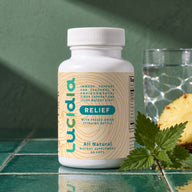
This is the approach Lucidia was designed around: quercetin and bromelain for mast cell stabilization, NAC for glutathione and liver clearance, reishi for immune modulation, stinging nettles for histamine pathway support. Five ingredients addressing different parts of the same network.
Layer 5: Rebuild the microbiome
After gut conditions are treated, repopulating with histamine-safe probiotic strains supports long-term histamine metabolism. Bifidobacterium infantis and B. longum are the workhorses here. Spore-based probiotics (Bacillus subtilis, B. coagulans) can be introduced alongside for broader microbial diversity without histamine concerns.
Protocol
Five-layer gut-histamine repair
- Reduce histamine input with a low-histamine elimination diet (temporary, 2-4 weeks)
- Support DAO with cofactors: P5P (25-50 mg), copper (1-2 mg), vitamin C (500-1,000 mg)
- Treat the gut condition: antimicrobials for SIBO, gluten avoidance for celiac, L-glutamine + zinc carnosine for permeability
- Stabilize mast cells with quercetin (500-1,000 mg) + NAC (600-1,200 mg) for glutathione support
- Rebuild microbiome with histamine-safe strains: B. infantis, B. longum, L. rhamnosus, spore-based probiotics
Work through layers sequentially. Each layer builds on the previous one. Consult a practitioner for personalized guidance.
Testing the Gut-Histamine Connection
If you suspect your histamine symptoms are gut-driven, several tests can help clarify:
| Test | What It Reveals | Best For |
|---|---|---|
| SIBO breath test (lactulose or glucose) | Hydrogen and methane levels indicating bacterial overgrowth | Confirming small intestinal overgrowth as a histamine driver |
| Comprehensive stool analysis (GI-MAP) | Bacterial composition, pathogens, inflammatory markers, digestive function | Identifying histamine-producing bacteria and gut inflammation |
| Serum DAO | Circulating DAO levels (low = below 10 U/mL) | Confirming reduced DAO activity, suggesting gut lining damage |
| Zonulin or lactulose-mannitol | Markers of intestinal permeability | Detecting "leaky gut" that bypasses the DAO barrier |
| Food sensitivity panels (IgG/IgA) | Foods triggering gut inflammation | Use cautiously, always combined with elimination diet data |
None of these tests is perfect in isolation. But together with symptoms and dietary response data, they build a picture of what is happening at the gut level.
Why This Changes the Approach
The conventional approach to histamine intolerance is "avoid high-histamine foods." That is layer 1. It works for symptom management but does not explain why histamine tolerance is low or offer a path back to normal eating.
The gut-focused approach asks: why is DAO low? What is damaging the gut lining? Are gut bacteria producing excess histamine? Are gut mast cells overactivated? What is driving the permeability?
Answering those questions leads to interventions that restore the body's capacity to handle histamine normally. The low-histamine diet becomes a temporary tool during the repair process, not a permanent lifestyle.
Key takeaway
The low-histamine diet is layer 1, not the whole answer. The gut-focused approach asks why DAO is low, what is damaging the lining, and whether bacteria or mast cells are producing excess histamine internally. Answer those questions, and the diet becomes temporary.
That is the difference between managing histamine intolerance and resolving it.
Shop Lucidia — five ingredients supporting mast cell stability, liver clearance, and immune modulation. Same five ingredients since 2009.
These statements have not been evaluated by the Food and Drug Administration. This product is not intended to diagnose, treat, cure, or prevent any disease.
References
- Bischoff, S. C. (2009). Physiological and pathophysiological functions of intestinal mast cells. Seminars in Immunopathology, 31(2), 159-177.
- Sattler, J., et al. (1988). Diamine oxidase (DAO) and histamine metabolism in patients with gastrointestinal diseases. Digestive Diseases and Sciences, 33(6), 706-712.
- Dev, S., et al. (2008). Suppression of histamine signaling by probiotic Lactobacillus rhamnosus. Journal of Immunology, 180(7), 4765-4775.
- Honzawa, Y., et al. (2011). Involvement of interleukin-17A-induced expression of heat shock protein 47 in intestinal fibrosis in Crohn's disease. Gut, 60(4), 528-535.
- Raithel, M., et al. (1999). Mucosal histamine content and histamine secretion in Crohn's disease, ulcerative colitis, and allergic enteropathy. International Archives of Allergy and Immunology, 116(4), 271-278.
- Weng, Z., et al. (2012). Quercetin is more effective than cromolyn in blocking human mast cell cytokine release. PLoS ONE, 7(3), e33805.
- Schink, M., et al. (2018). Microbial patterns in patients with histamine intolerance. Journal of Physiology and Pharmacology, 69(4).
Nathalie Babazadeh, L.Ac
Co-Founder & Formulator
18+ years in acupuncture, TCM, and herbalism. Co-formulated Lucidia in 2009 from clinical practice. Co-founder of the REN School of Consciousness.
Continue reading
All histamine articles →-
 Start here
Histamine and immune intelligence: the guide
Every histamine article, in reading order. Nathalie Babazadeh, L.Ac. and Kacey Moe, MS -
 Methylation and detox
What Is NAC? The Overlooked Compound Behind Cellular Defense
Kacey Moe, MS · 8 min -
 Histamine and mast cells
Why That Glass of Wine Gives You a Stuffy Nose (And What Your Body Is Actually Telling You)
Nathalie Babazadeh, L.Ac. · 6 min

Not sure where to start? Take the 3-minute quiz
Get new articles by email
New articles from Nathalie and Kacey. Unsubscribe anytime.

Lucidia
Daily histamine support, formulated by Nathalie and Kacey in their practice in 2009. Same five ingredients since.
★ 4.3 out of 5 stars from · 238 reviewsQuercetin, NAC, reishi, bromelain, nettle
$29.99Free shipping · 60 capsules
Subscribe and save 10%