You probably know someone who eats aged cheese, drinks red wine, walks through a field of blooming wildflowers, and feels absolutely nothing.
And then there's you — or your client, or your kid — reacting to foods that were fine in December. Brain fog after lunch. Skin flushing from a glass of kombucha. Congestion that showed up in early March and won't leave.
Here's what's actually happening at the cellular level: the difference isn't sensitivity. It's capacity.
The Bucket Is Real Biochemistry
The "histamine bucket" isn't just a metaphor. It maps directly onto the biochemistry of histamine metabolism.
Your body produces and encounters histamine constantly — it's a neurotransmitter, a gastric acid regulator, and an immune signaling molecule. Under normal conditions, two enzymes keep it in check:
-
DAO (diamine oxidase) — breaks down histamine in the gut. This is your first line of defense against dietary histamine.
-
HNMT (histamine N-methyltransferase) — breaks down histamine inside cells, particularly in the liver and central nervous system.
When these enzymes are working well and the load is manageable, histamine flows in and gets cleared. The bucket stays below the rim.
The problem in spring is straightforward: environmental histamine sources surge (pollen, mold, temperature swings) while your clearance capacity stays the same — or drops. The bucket fills faster than it drains.
What Fills the Bucket
Most people think of pollen as the main spring trigger. But the bucket fills from four directions at once.
Environmental load
Pollen, mold spores, dust mite activity (which peaks in warm, humid air). These activate mast cells, which release histamine into tissues. This is the input most people notice first.
Dietary histamine
Fermented foods, aged cheeses, cured meats, canned fish, red wine, vinegar, leftover cooked protein. These deliver pre-formed histamine directly into your gut, where DAO has to break it down before it enters circulation.
Here's the part that catches people off guard: a bowl of leftover chicken soup that sat in the fridge for two days has significantly more histamine than the same soup eaten fresh. Bacterial action on protein produces histamine over time. In winter, this might not matter. In spring — when your bucket is already half-full from pollen — it can be the thing that tips you over.
Gut-derived histamine
Certain gut bacteria produce histamine as a metabolic byproduct. If your microbiome is skewed toward histamine-producing strains — Lactobacillus casei, Lactobacillus delbrueckii, some E. coli strains — your gut is filling the bucket from the inside, independent of what you eat or breathe.
And here's the connection that matters most: DAO is produced in the intestinal lining. If your gut barrier is compromised — from inflammation, dysbiosis, or permeability issues — you get a double hit. More histamine production, less histamine clearance.
Hormonal fluctuations
Estrogen stimulates mast cell degranulation. Progesterone stabilizes it. This is why many women notice their histamine tolerance drops in the luteal phase or during perimenopause — and why spring symptoms can be noticeably worse during certain weeks of the cycle. Learn more in our guide to mast cell activation.
What Empties the Bucket
This is where nutrition science gets practical. Your clearance capacity isn't fixed. You can influence it.
DAO needs specific cofactors
DAO is a copper-dependent enzyme that requires vitamin B6 and vitamin C to function. If you're low in any of these, your DAO output drops — and your first line of defense against dietary histamine weakens.
The research is clear on this: DAO activity correlates with nutrient status. The cofactors matter.
-
Vitamin B6 — found in poultry, fish, potatoes, bananas, chickpeas
-
Copper — found in liver, shellfish, dark chocolate, sunflower seeds
-
Vitamin C — degrades histamine directly and supports DAO activity
-
Omega-3 fatty acids — support DAO production and reduce inflammatory signaling
Liver clearance runs on glutathione
HNMT and your liver's Phase II detoxification pathways clear the histamine that DAO doesn't catch. These pathways depend on glutathione — your body's master detoxification molecule.
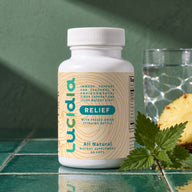
NAC (N-Acetyl Cysteine) is the most direct precursor to glutathione synthesis. This is the mechanism behind NAC's role in Lucidia — it feeds the liver pathway that processes histamine after it enters circulation. Not suppression. Upstream support for your body's own clearance system.
Mast cell stability determines how much enters in the first place
Quercetin stabilizes mast cell membranes, reducing the amount of histamine released per activation event. Less histamine entering the bucket means your clearance enzymes have a better chance of keeping up.
A Practical Spring Protocol
This is the "what to actually do about it" section. These are nutrition-level interventions — things you can start this week.
1. Eat fresh, cook fresh
During peak spring months, prioritize freshly cooked protein over leftovers. (For a complete food list and 4-week protocol, see our low-histamine diet guide.) If you batch cook, freeze portions immediately rather than refrigerating for days. This single change reduces dietary histamine intake more than most people expect.
2. Know your high-histamine triggers
You don't need to eliminate everything. But be strategic: aged cheese, cured meats, canned fish, red wine, and vinegar-based dressings are the highest-impact items. Swap red wine for white. Choose fresh fish over canned. Use lemon juice instead of vinegar.
3. Support DAO production with targeted nutrients
Increase vitamin B6 (poultry, wild-caught salmon, sweet potatoes), vitamin C (bell peppers, broccoli, citrus), and omega-3s (wild salmon, sardines, flaxseed). These are DAO cofactors — they directly support the enzyme that clears dietary histamine.
4. Prioritize gut barrier integrity
Your gut produces DAO. If the gut lining is inflamed or permeable, DAO output drops. Bone broth, collagen peptides, zinc carnosine, and L-glutamine all support mucosal integrity. Reduce gut irritants — alcohol, NSAIDs, processed seed oils — during spring especially.
5. Start early, not late
The most common mistake is waiting until symptoms peak. By then the bucket is overflowing and you're playing catch-up. Begin supporting your clearance pathways in late February or early March — before the environmental load ramps up.
The Bottom Line
The histamine bucket is not about being "sensitive." It's about math.
Input from environment, food, gut bacteria, and hormones goes in. DAO, HNMT, and liver detox pathways take it out. When input exceeds output, the bucket overflows.
The good news: the output side is not fixed. Nutrient status, gut health, liver support, and mast cell stability are all things you can actively influence. That's not a guess — that's what the research shows.
These statements have not been evaluated by the Food and Drug Administration. This product is not intended to diagnose, treat, cure, or prevent any disease.



 Start here
 Histamine and mast cells
 Histamine and mast cells
