
Stinging Nettle for Allergies and Beyond: What the Research Says

Quick answer
Stinging nettle modulates the histamine system at multiple points: influencing H1 receptor expression, inhibiting tryptase, and reducing pro-inflammatory cytokines. It also provides bioavailable iron, silica, calcium, and magnesium. Freeze-dried preparations preserve the most bioactive compounds. Learn more in our guide to histamine and gut health.

In This Article
I have been working with stinging nettle for nearly two decades. It is not glamorous. Nobody puts nettle leaf on an influencer mood board. It grows in ditches, along fences, on the edges of neglected fields. If you brush against it, it stings.
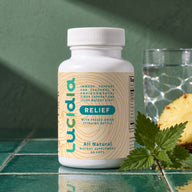
And yet it shows up in my clinical practice more consistently than most of the supplements that dominate health store shelves. I put it in Lucidia. I trained with it in every traditional herbal system I studied. European phytotherapy considers it one of the most commonly prescribed plants on the continent.
The disconnect between nettle's reputation and its clinical utility is something I want to close.
A Plant with History
Stinging nettle (Urtica dioica) has been used medicinally for at least 2,000 years. Roman soldiers reportedly flogged their legs with fresh nettles during campaigns in cold climates to improve circulation (a practice called urtication that is still used in some folk medicine traditions). Dioscorides, the Greek physician who wrote the foundational text of Western herbalism in the 1st century, prescribed nettle for nosebleeds, kidney stones, and respiratory conditions.
In Traditional Chinese Medicine, nettle has been used as a blood tonic and kidney supporter. In Ayurveda, it appears as a mineral-rich plant for building tissue. Across European folk medicine, nettle tea was a spring tonic, drunk to clear winter stagnation and replenish minerals after months of stored-food diets.
What these traditions share is the observation that nettle is restorative. It builds something. It is not a symptomatic herb you reach for in a crisis. It is a tonic you take consistently, and over time, something shifts.
The Modern Research
Histamine Modulation
The research that is most relevant to what we do at Artemis is nettle's effect on the histamine pathway.
A 1990 randomized, double-blind study by Mittman found that freeze-dried Urtica dioica leaf was rated more effective than placebo for reducing symptoms associated with histamine-mediated reactions. 57% of patients rated it effective, compared to 37% for placebo (Mittman, 1990). Moderate evidence The study was small (98 participants) but remains one of the few controlled trials on nettle and histamine.
The mechanism appears to be multifactorial. Nettle does not work like a pharmaceutical antihistamine that blocks a specific receptor. Instead, it modulates the histamine system at several points:
Histamine receptor modulation. In vitro data suggests nettle extracts influence H1 receptor expression on immune cells, affecting how the body responds to histamine rather than eliminating histamine itself (Roschek et al., 2009).
Tryptase inhibition. Roschek et al. (2009) found that nettle extract inhibited tryptase, an enzyme released from mast cells alongside histamine during degranulation. Tryptase contributes to tissue inflammation and bronchoconstriction independent of histamine.
Prostaglandin pathway. Nettle inhibits cyclooxygenase (COX) and lipoxygenase (LOX) enzymes, reducing production of pro-inflammatory prostaglandins and leukotrienes (Obertreis et al., 1996). This is the same general pathway NSAIDs target, but nettle does it without the gut-lining damage that NSAIDs cause (NSAIDs actually inhibit DAO enzyme production, making histamine metabolism worse).
Cytokine modulation. Nettle leaf extract reduces production of TNF-alpha and IL-1beta, pro-inflammatory cytokines involved in both acute and chronic inflammatory responses (Riehemann et al., 1999).
The picture that emerges is not a single mechanism but a broad anti-inflammatory and histamine-modulating profile. Nettle does not slam one pathway shut. It turns down the volume across several related systems.
Mineral Content
Nettle is one of the most mineral-dense plants in the temperate world. This is not marketing language; it is measurable chemistry.
| Mineral | Why It Matters |
|---|---|
| Iron | One of the highest plant sources of non-heme iron. Accompanied by vitamin C within the plant itself, improving absorption. |
| Silica | Connective tissue, skin, hair, and nail integrity. Deficiency is common and rarely tested for. |
| Calcium | Bioavailable food-matrix form. Better absorbed than calcium carbonate supplements for many people. |
| Magnesium | Cofactor for over 300 enzymatic reactions. Chronically under-consumed in modern diets. |
| Potassium | Electrolyte balance and blood pressure regulation. |
| Chlorophyll | Bioactive green pigment supporting liver detoxification pathways and blood health. |
For my patients with chronic fatigue, thinning hair, brittle nails, or the diffuse mineral depletion that comes from years of stress and poor absorption, nettle is often the first plant I reach for. Not as a quick fix. As a slow rebuilder.
Adrenal and Kidney Support
In traditional herbalism, nettle is classified as an adrenal trophorestorative, a category of plants that rebuild adrenal gland function over time rather than stimulating it (like caffeine or licorice do).
This aligns with its mineral profile. The adrenal glands require magnesium, potassium, and vitamin C for hormone production. Chronic stress depletes these minerals. Nettle replenishes them in a bioavailable, food-form matrix.
Nettle also has a mild diuretic effect, supporting kidney function and fluid balance without depleting potassium (unlike pharmaceutical diuretics, which can cause potassium loss). This gentle kidney support is why nettle appears in virtually every European herbal detoxification protocol.
Blood Sugar Regulation
Several studies have examined nettle's effect on blood glucose. Kianbakht et al. (2013) conducted a randomized controlled trial and found that Urtica dioica leaf extract significantly reduced fasting blood glucose and HbA1c in type 2 diabetic patients compared to placebo. The proposed mechanism involves improved insulin sensitivity and reduced hepatic glucose output.
This is not nettle's primary use in our protocols, but for patients managing both histamine issues and metabolic health (a common overlap in the population we serve), it is a useful secondary benefit.
Why Freeze-Dried Matters
The form of nettle preparation affects its bioactivity. This is where herbalism and pharmacology meet.
| Form | Strengths | Limitations | Best For |
|---|---|---|---|
| Freeze-dried leaf | Preserves histamine-modulating compounds; no heat degradation | Requires capsule form | Supplement formulations targeting histamine (used in Lucidia) |
| Tincture (alcohol extract) | Effective for many nettle properties; long shelf life | Extracts more alkaloids, less mineral content | Herbalist protocols, convenient dosing |
| Tea / long infusion | Excellent mineral extraction (4-8 hr steep) | Volatile histamine-modulating compounds partially lost | Mineral replenishment, daily tonic |
| Cooked nettles (as food) | Outstanding nutrition, traditional food | Variable bioactive levels | Nutritional support, spring eating |
For supplement formulations targeting histamine support, freeze-dried is the standard.
Nettle in the Lucidia System
In Lucidia's five-ingredient formula, nettle works alongside the other ingredients rather than overlapping with them:
- Quercetin stabilizes mast cells upstream (prevents degranulation)
- Nettle modulates histamine receptor response downstream (affects how the body reacts to histamine)
- NAC supports liver clearance of histamine through the HNMT/glutathione pathway
- Reishi modulates overall immune balance
- Bromelain clears inflammatory debris and improves quercetin absorption
Key takeaway
In Lucidia's system, quercetin prevents histamine release upstream. NAC supports clearance through the liver. Nettle modulates how the body responds to histamine that has already been released — a different intervention point.
Nettle's role is the downstream modulator. Even after histamine is released (either from mast cells or from dietary sources that bypass DAO), nettle influences how the body's receptor systems respond to it. This is a different intervention point than quercetin (upstream, preventing release) or NAC (clearance, metabolizing histamine after the fact).
The mineral content is a bonus. For people whose histamine issues are partly driven by nutrient depletion (common in chronic stress, chronic inflammation, or GI conditions that impair absorption), nettle's iron, silica, and magnesium contribute to the broader metabolic environment that healthy immune function requires.
How I Use Nettle in Practice
As part of Lucidia: The daily protocol. Two capsules provide a standardized dose of freeze-dried nettle alongside the four other active ingredients.
As tea: For patients who want additional mineral support. I recommend a long-steeped infusion: 1 ounce (by weight) dried nettle leaf in a quart mason jar, covered with boiling water, steeped 4-8 hours or overnight. Strain and drink throughout the day. This extracts the mineral content more thoroughly than a quick tea steep.
Seasonally: Nettle is a spring plant in nature, and there is an old herbalist logic to using it more heavily in spring for its tonic and detoxifying properties. This is part of why histamine response spikes every spring — and why spring is the season I increase the recommendation.
For mineral depletion: Patients with low ferritin, thinning hair, brittle nails, or chronic fatigue often respond well to nettle as a long-term mineral tonic. I typically recommend 3-6 months of daily use to see the rebuilding effect.
Key takeaway
Nettle works as a slow rebuilder, not a quick fix. For patients with mineral depletion from chronic stress or poor absorption, 3-6 months of daily use is typical before the rebuilding effect is visible.
The Unglamorous Medicine
I started this piece by saying nettle is not glamorous. I want to end by saying something about why that matters.
The supplements that get attention tend to be novel, exotic, or backed by a high-profile researcher. Nettle is none of those things. It grows everywhere. People pull it out of their gardens. It has been used so long that nobody can claim they discovered it.
But in 18 years of clinical practice, the plants that I keep coming back to are almost always the common ones. The ones that grow where people live. The ones that have been used for centuries, not because of marketing, but because they worked, generation after generation, for the people who paid attention.
Nettle is that kind of medicine. It does not announce itself. It just works.
Shop Lucidia — stinging nettle + quercetin + NAC + reishi + bromelain. Five ingredients, practitioner-formulated since 2009.
These statements have not been evaluated by the Food and Drug Administration. This product is not intended to diagnose, treat, cure, or prevent any disease.
References
- Mittman, P. (1990). Randomized, double-blind study of freeze-dried Urtica dioica in the treatment of allergic rhinitis. Planta Medica, 56(1), 44-47.
- Roschek, B., et al. (2009). Nettle extract (Urtica dioica) affects key receptors and enzymes associated with allergic rhinitis. Phytotherapy Research, 23(7), 920-926.
- Obertreis, B., et al. (1996). Anti-inflammatory effect of Urtica dioica folia extract in comparison to caffeic malic acid. Arzneimittel-Forschung, 46(1), 52-56.
- Riehemann, K., et al. (1999). Plant extracts from stinging nettle (Urtica dioica), an antirheumatic remedy, inhibit the proinflammatory transcription factor NF-κB. FEBS Letters, 442(1), 89-94.
- Kianbakht, S., et al. (2013). Improved glycemic control in patients with advanced type 2 diabetes mellitus taking Urtica dioica leaf extract. Clinical Laboratory, 59(9-10), 1071-1076.
- Chrubasik, J. E., et al. (2007). A comprehensive review on nettle effect and efficacy profiles. Phytomedicine, 14(7-8), 568-579.
Nathalie Babazadeh, L.Ac
Co-Founder & Formulator
18+ years in acupuncture, TCM, and herbalism. Co-formulated Lucidia in 2009 from clinical practice. Co-founder of the REN School of Consciousness.
Continue reading
All histamine articles →-
 Start here
Histamine and immune intelligence: the guide
Every histamine article, in reading order. Nathalie Babazadeh, L.Ac. and Kacey Moe, MS -
 The five ingredients
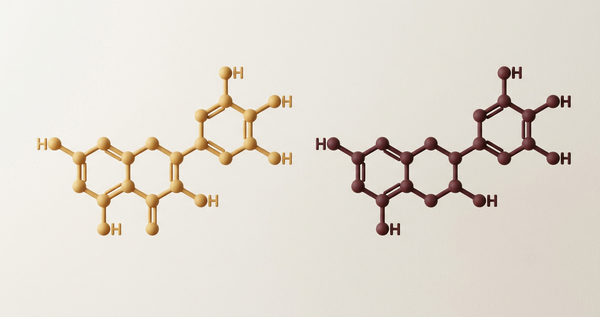
Quercetin vs. Resveratrol: Which Flavonoid Should You Take?
Artemis Therapeutics · 8 min -
 The five ingredients
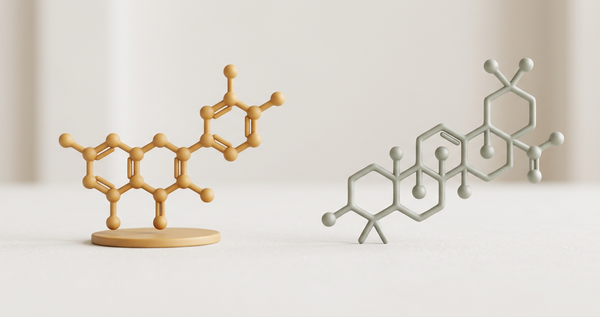
Quercetin vs. Cromolyn for Mast Cell Support: What the Research Shows
Kacey Moe, MS · 5 min
Not sure where to start? Take the 3-minute quiz
Get new articles by email
New articles from Nathalie and Kacey. Unsubscribe anytime.

Lucidia
Daily histamine support, formulated by Nathalie and Kacey in their practice in 2009. Same five ingredients since.
★ 4.3 out of 5 stars from · 238 reviewsQuercetin, NAC, reishi, bromelain, nettle
$29.99Free shipping · 60 capsules
Subscribe and save 10%