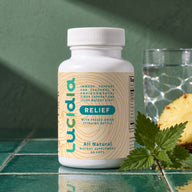

Bromelain: The Inflammation-Clearing Enzyme You're Probably Missing
Bromelain is a group of proteolytic enzymes from pineapple stems that break down inflammatory proteins, support lymphatic drainage, and improve quercetin absorption. Take it on an empty stomach for systemic effects, with meals for digestive support.

In This Article
Of the five ingredients in Lucidia, bromelain is the one people ask about least. Quercetin has the mast cell research. NAC has the glutathione story. Reishi has 2,000 years of traditional use. Bromelain is the enzyme from pineapple. It does not have the same name recognition.
But when I explain what bromelain does in the context of the full formula, it is often the ingredient that makes practitioners nod. It is the cleanup crew. The other four ingredients modulate immune response and support detoxification. Bromelain clears the debris that accumulates when those systems have been overwhelmed.
What Bromelain Actually Is
Bromelain is not a single enzyme. It is a group of proteolytic (protein-digesting) enzymes extracted from the stem of the pineapple plant (Ananas comosus). The stem contains a much higher concentration than the fruit, which is why you cannot get therapeutic doses from eating pineapple alone.
The primary enzyme in the complex is a cysteine protease. It breaks peptide bonds in proteins, which is the same chemical reaction your stomach acid and pancreatic enzymes perform during digestion. The difference is that bromelain remains active across a wide pH range (3.0-8.0), which means it can function in the stomach, the small intestine, and after absorption into the bloodstream (Pavan et al., 2012).
This pH resilience is what makes bromelain useful beyond digestion. Taken on an empty stomach, a portion of intact bromelain crosses the intestinal wall and enters systemic circulation, where it can act on inflammatory proteins throughout the body.
Bromelain activity is measured in GDU (gelatin digesting units) or MCU (milk clotting units), not milligrams. This matters because two bromelain products can have the same weight per capsule but very different enzymatic activity. When evaluating bromelain supplements, look at the GDU or MCU count, not just the milligrams.
What Bromelain Does
Breaks Down Inflammatory Proteins
The most researched function of bromelain is its proteolytic activity against inflammatory mediators. Bromelain breaks down fibrin (the protein that forms blood clots and can accumulate at sites of chronic inflammation), immune complexes (antibody-antigen clusters that trigger inflammation when they deposit in tissues), and kinins (inflammatory peptides that cause pain and swelling) (Maurer, 2001).
When the immune system mounts an inflammatory response, these proteins accumulate. In acute inflammation (a sprained ankle, a surgical wound), the cleanup happens naturally as the response resolves. In chronic inflammation, the cleanup stalls. Inflammatory debris persists, signals continue, and the inflammation becomes self-perpetuating.
Bromelain helps clear this backlog. It is not anti-inflammatory in the way NSAIDs are (blocking cyclooxygenase enzymes). It works by physically breaking down the proteins that sustain inflammation after the initial trigger is gone.
Supports Lymphatic Drainage
The lymphatic system is your body's waste removal network for the interstitial space (the fluid between cells). When inflammation causes swelling, the area fills with fluid, proteins, and cellular debris. The lymphatic system is responsible for draining this fluid and filtering it through lymph nodes.
Bromelain reduces edema (swelling) by breaking down the proteins that trap fluid in inflamed tissue. Multiple studies have demonstrated this in post-surgical settings. A meta-analysis by Ley et al. (2011) found that bromelain reduced swelling, bruising, and pain after dental surgery compared to placebo.
For people dealing with chronic inflammatory conditions, lymphatic congestion, or the general "puffiness" that accompanies immune overreactivity, bromelain's drainage support addresses something most supplements do not touch.
Modulates Immune Signaling
Bromelain has direct effects on immune cells beyond its proteolytic cleanup function. It modulates the production of cytokines (immune signaling molecules), reducing pro-inflammatory cytokines like IL-1beta, IL-6, and TNF-alpha while preserving anti-inflammatory signals (Onken et al., 2008).
It also affects surface markers on immune cells. Bromelain removes certain CD44 molecules from T-cell surfaces, which may help redirect immune responses away from autoimmune-type activity. This is still being studied, but the early data suggests bromelain does not just clean up after inflammation; it can help redirect the immune system's targeting.
How bromelain resolves chronic inflammation
Chronic inflammation
Ongoing immune activation from unresolved triggers
Inflammatory protein buildup
Fibrin, immune complexes, and kinins accumulate in tissue
Bromelain proteolytic activity
Cysteine protease breaks peptide bonds across pH 3.0–8.0
Protein breakdown + lymphatic clearance
Debris cleared, fluid drained, waste filtered through lymph nodes
Resolution of inflammatory cycle
Self-perpetuating loop broken, tissue begins recovery
Improves Quercetin Absorption
This is where bromelain earns its place in Lucidia's formula. Quercetin is one of the most studied flavonoids for mast cell stabilization (see also our mast cell activation deep-dive), but it has a major limitation: poor oral bioavailability. Much of an oral quercetin dose is metabolized in the gut before it can be absorbed.
Bromelain improves quercetin absorption through its proteolytic activity in the gut. The exact mechanism is not fully characterized, but the leading hypothesis is that bromelain breaks down proteins in the intestinal mucus layer and tight junctions, temporarily increasing permeability for quercetin molecules. It may also inhibit the efflux transporters that pump quercetin back out of enterocytes (Nair et al., 2010).
The quercetin-bromelain pairing is one of the oldest evidence-based combinations in practitioner supplementation. It predates the recent interest in quercetin phytosomes and liposomal delivery systems by decades, and it remains the most cost-effective approach to improving quercetin's bioavailability.
The Bromelain Research
Surgery and Trauma Recovery
The most robust clinical data for bromelain comes from surgical settings. A systematic review by Braun et al. (2005) analyzed multiple trials and found that bromelain consistently reduced post-operative swelling, bruising, and pain across different surgical types (dental, rhinoplasty, orthopedic).
The doses used in these studies typically ranged from 500-2,000 GDU per day, started 1-3 days before surgery and continued for 5-7 days after. Bromelain was well-tolerated with minimal side effects.
Sinusitis and Respiratory Inflammation
A randomized trial by Helms and Miller (2006) found that bromelain improved symptoms in patients with chronic sinusitis more effectively than standard treatment alone. The proposed mechanism: bromelain thins mucus by breaking down the glycoproteins that make it viscous, while its anti-inflammatory effect reduces the tissue swelling that blocks sinus drainage.
Osteoarthritis
Several studies have examined bromelain for osteoarthritis pain. A comparative trial found that a bromelain-containing enzyme formulation was as effective as diclofenac (an NSAID) for knee osteoarthritis pain, with fewer GI side effects (Akhtar et al., 2004). The sample sizes were small and more research is needed, but the signal is consistent with bromelain's anti-inflammatory mechanism.
Digestive Support
When taken with meals rather than on an empty stomach, bromelain works as a digestive enzyme, helping break down dietary proteins. This can be useful for people with pancreatic insufficiency, low stomach acid, or digestive symptoms after high-protein meals. Some practitioners use bromelain as part of a broader digestive enzyme protocol.
How Bromelain Fits in the Larger System
In Lucidia's five-ingredient formula, each ingredient handles a different layer of the immune regulation system:
- Quercetin stabilizes mast cells, preventing excessive histamine release
- NAC provides the glutathione precursor for liver detoxification and HNMT-pathway histamine clearance
- Reishi modulates overall immune balance, calming overreactivity while preserving defense
- Stinging nettles modulates the histamine pathway at the receptor level
- Bromelain clears inflammatory debris, supports lymphatic drainage, and improves quercetin absorption
Bromelain is the facilitator. It makes quercetin work better (absorption), helps the immune system resolve rather than perpetuate inflammatory responses (proteolytic cleanup), and supports the drainage systems that remove waste products (lymphatic support).
Without bromelain, you can stabilize mast cells and support detox pathways, but the accumulated inflammatory proteins from past immune overreactivity remain. It is like putting out a fire but leaving the smoke and ash.
Key takeaway
Bromelain is the cleanup crew in Lucidia's five-ingredient system. The other ingredients modulate immune response and support detoxification. Bromelain clears the accumulated debris that keeps inflammation self-perpetuating.
Dosing and Practical Guidance
| Goal | When to Take | Why |
|---|---|---|
| Systemic anti-inflammatory | Empty stomach (30 min before meals or 2 hrs after) | Allows intact bromelain to absorb into the bloodstream instead of being used as a digestive enzyme |
| Digestive support | With meals | Bromelain breaks down dietary proteins in the stomach and small intestine |
| Quercetin absorption | With quercetin, away from meals | This is how Lucidia is designed — take capsules between meals or as directed |
Typical doses in clinical studies: 500-2,000 GDU per day for anti-inflammatory effects. The amount in Lucidia's formula is calibrated to the quercetin dose for optimal pairing.
Dosage reference
Bromelain (systemic)
500–2,000 GDU/day
On empty stomach, 30 min before meals
Bromelain (digestive)
As needed
With high-protein meals
Bromelain (quercetin pairing)
Take together
Away from meals for absorption
Consult your practitioner before starting any new supplement protocol.
Safety considerations:
- Generally very well tolerated. GI upset is rare.
- Mild fibrinolytic (clot-thinning) activity. If you take anticoagulant medications (warfarin, heparin) or antiplatelet drugs (aspirin, clopidogrel), consult your healthcare provider before supplementing.
- Pineapple allergy is a contraindication. If you react to pineapple, avoid bromelain.
- Some evidence of increased antibiotic absorption. If taking amoxicillin or tetracycline, discuss with your prescriber.
The Ingredient That Makes the Formula Work
Bromelain will never be a trending supplement. It does not have the longevity research of quercetin, the cellular defense story of NAC, or the ancient mystique of reishi. It is an enzyme from a pineapple stem.
But it is the ingredient that makes the rest of the formula work better. Bromelain improves quercetin absorption, clears the inflammatory backlog, and supports the drainage systems that carry waste out of tissues. In a formula designed as a system rather than a collection of individual ingredients, bromelain is the connecting tissue.
Shop Lucidia — quercetin + bromelain + NAC + reishi + stinging nettles. Five ingredients, one system. Same five ingredients since 2009.
These statements have not been evaluated by the Food and Drug Administration. This product is not intended to diagnose, treat, cure, or prevent any disease.
References
- Pavan, R., Jain, S., & Kumar, A. (2012). Properties and therapeutic application of bromelain: A review. Biotechnology Research International, 2012, 976203.
- Maurer, H. R. (2001). Bromelain: biochemistry, pharmacology and medical use. Cellular and Molecular Life Sciences, 58(9), 1234-1245.
- Ley, C. M., et al. (2011). A review of the use of bromelain in cardiovascular diseases. Journal of Chinese Integrative Medicine, 9(7), 702-710.
- Onken, J. E., et al. (2008). Bromelain treatment decreases secretion of pro-inflammatory cytokines and chemokines by colon biopsies in vitro. Clinical Immunology, 126(3), 345-352.
- Nair, H. B., et al. (2010). Delivery of antiinflammatory nutraceuticals by nanoparticles for the prevention and treatment of cancer. Biochemical Pharmacology, 80(12), 1833-1843.
- Braun, J. M., et al. (2005). Therapeutic use, efficiency and safety of the proteolytic pineapple enzyme bromelain. Evidence-Based Integrative Medicine, 2(4), 193-200.
- Helms, S., & Miller, A. (2006). Natural treatment of chronic rhinosinusitis. Alternative Medicine Review, 11(3), 196-207.
- Akhtar, N. M., et al. (2004). Oral enzyme combination versus diclofenac in the treatment of osteoarthritis of the knee. Clinical Rheumatology, 23(5), 410-415.

Artemis Therapeutics
Practitioner-founded in San Diego in 2009 by Nathalie Babazadeh, L.Ac. and Kacey Moe, MS.
Continue reading
All histamine articles →-
 Start here
Histamine and immune intelligence: the guide
Every histamine article, in reading order. Nathalie Babazadeh, L.Ac. and Kacey Moe, MS -
 Methylation and detox
What Is NAC? The Overlooked Compound Behind Cellular Defense
Kacey Moe, MS · 8 min -
 TCM and practices
Reishi Mushroom: Ancient Tonic, Modern Wellness Ally
Nathalie Babazadeh, L.Ac. · 4 min
Not sure where to start? Take the 3-minute quiz
Get new articles by email
New articles from Nathalie and Kacey. Unsubscribe anytime.

Lucidia
Daily histamine support, formulated by Nathalie and Kacey in their practice in 2009. Same five ingredients since.
★ 4.3 out of 5 stars from · 238 reviewsQuercetin, NAC, reishi, bromelain, nettle
$29.99Free shipping · 60 capsules
Subscribe and save 10%