A few weeks ago, I was at a friend's dinner party. We were sitting around the table, a nice bottle of Cabernet had been opened, and about halfway through her first glass, my friend's face turned pink. Her eyes got a little glassy. She sniffled and said, "I think I'm becoming allergic to wine."
I've heard some version of this so many times over the years. At restaurants, at holiday parties, even from patients who come into my practice. And my answer is always the same: You're probably not allergic to wine. But your body is doing exactly what it does during allergy season.
That flushed face, the stuffy nose, the foggy feeling. It's the same histamine response that hits you in April when the pollen count spikes. The trigger is different. The mechanism is identical.
If You Know Allergies, You Already Understand This
If you've dealt with seasonal allergies, you already know histamine on a personal level. It's the reason your eyes itch, your sinuses swell, and you reach for a tissue every five minutes in springtime. Most of us think of histamine as something that gets triggered by pollen or pet dander. But histamine is much busier than that.
Your body releases histamine in response to all kinds of things: certain foods, emotional stress, hormonal shifts, and alcohol. Especially alcohol. I wrote about this years ago when I listed alcohol as the number one food that makes allergies worse. What I want to do now is go deeper into why, because I think understanding the mechanism changes how you approach it.
Red wine is especially interesting because it's a double hit. It contains histamine itself, formed during fermentation, and it triggers your body to release even more from your own mast cells. Beer and champagne do this too, though red wine tends to be the biggest culprit. So you're getting histamine from the outside and generating it from the inside, all at once.
What Actually Happens When You Drink
Here's what's going on in the body, step by step, in plain language.
When you have a glass of wine, your liver gets to work breaking down the alcohol. First it converts the alcohol into something called acetaldehyde, which is actually toxic, and then into acetic acid, which is harmless. This process requires specific enzymes and glutathione, which the body uses for detoxification.
At the same time, the alcohol is triggering your mast cells (the same immune cells involved in allergies) to dump histamine into your bloodstream. Now your body has two jobs happening at once: it's trying to clear the alcohol AND clear the histamine. And both of those jobs go through the liver.
I wrote years ago that the liver must clean all the blood as its regular job, so when alcohol is added, it's like trying to wash dishes in dirty water. All the debris that doesn't get cleaned up stays in the system, and for people who are histamine-sensitive, it shows up as congestion, flushing, headaches, or that heavy, puffy feeling the next morning.
There's also something called DAO (diamine oxidase), which is the enzyme your body uses to break down histamine in the gut. Some people naturally produce less of it. If that's you, even a small glass of wine can feel like a lot, while the person next to you has three glasses and feels fine. It's not in your head. Your body is just processing histamine differently.
How wine triggers the histamine cascade
Red wine
Contains histamine from fermentation
Triple hit
Delivers histamine + triggers mast cell release + alcohol inhibits DAO enzyme
Histamine accumulates
Liver overwhelmed clearing alcohol AND histamine simultaneously
Symptoms appear
Flushing, congestion, headache, brain fog
In practice, what I see is that the people who struggle most with wine are often the same ones who struggle with seasonal allergies, food sensitivities, or skin reactions. It's all connected. The trigger changes, but the pathway is the same.
Key takeaway
The people who struggle most with wine are often the same ones who struggle with food sensitivities, skin reactions, or seasonal symptoms. The trigger changes. The histamine pathway is the same.
What Can You Actually Do?
Here are five things that help, based on 18 years of clinical practice:
-
Notice your pattern. Pay attention to which drinks affect you most. Red wine, beer, and champagne are highest in histamine. Clear spirits like vodka or gin tend to be lower. You might find that you do fine with one type and not another. That's useful information about your body.
-
Don't drink on an empty stomach. Food slows absorption and gives the liver more time to do its work. This is simple, but it makes a real difference.
-
Hydrate between drinks. I have recommended this for years: drink a big glass of water and take 1000mg of good Vitamin C to take some of the burden off the liver. The water helps dilute and flush, and the Vitamin C is a natural antihistamine that supports the same detoxification pathways.
-
Support your liver with NAC. N-Acetyl Cysteine is a precursor to glutathione, the detoxification molecule the liver needs and that alcohol depletes. This isn't some new biohacking trend. Practitioners have known about NAC for decades. It's one of the most direct ways to replenish what alcohol takes from your system.
-
Eat quercetin-rich foods. Red onions, capers, apples, berries. I suspect the French eat French onion soup to detoxify the body before or after a long night of fun and alcohol. Whether they know it or not, those onions are loaded with quercetin, which helps stabilize the mast cells that release histamine in the first place.
Why the Same Five Ingredients Work Here
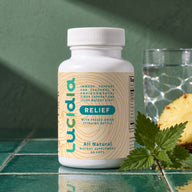
When Kacey and I formulated Lucidia back in 2009, we were thinking about allergies. We were thinking about the patients walking into my practice every spring, exhausted from medications that made them drowsy, looking for something that actually worked with their body instead of sedating it.
But what we were really formulating for was the histamine response itself — and that goes far beyond pollen season.
Each ingredient in Lucidia maps directly to what's happening when you have that glass of wine:
Quercetin stabilizes mast cells and helps prevent them from releasing histamine in the first place. This is the same ingredient that's become popular in longevity and biohacking circles. People are buying it separately now. It's been in our formula since 2009.
NAC is the precursor to glutathione. It replenishes what alcohol depletes. Going back to the dirty water metaphor: NAC is like giving your liver fresh, clean water to wash those dishes. It supports the detoxification process that gets overwhelmed when alcohol and histamine compete for the liver's attention.
Bromelain, the enzyme from pineapple, reduces the inflammatory response: the stuffy, puffy, swollen feeling. It also enhances quercetin absorption, which is why we pair them together. One without the other doesn't work as well.
Reishi mushroom is an immune modulator. In Chinese medicine, reishi is called the "mushroom of immortality." It's been used for thousands of years to calm overreaction in the body. It doesn't suppress the immune system. It helps it respond proportionally instead of overreacting to every trigger.
They were chosen to work as a system, each one supporting a different part of the same process.
Key takeaway
Quercetin stabilizes mast cells. NAC replenishes liver glutathione. Bromelain reduces inflammation and improves quercetin absorption. Reishi modulates immune overreactivity. Stinging nettles support histamine pathway modulation. Five ingredients, one system.
The Bigger Picture
When I look at it all together, seasonal allergies and wine flushing and food sensitivities and skin reactions, I see the same root pattern. The body's histamine response is involved in all of them. Instead of reaching for a different pill for every symptom, it makes more sense to support the underlying system that connects them all.
Your body already knows how to handle histamine. That's part of your body's original code. Sometimes it just needs a little support. The right nutrients, better habits, less burden on the liver.
I always come back to what I've written before: plant medicine, like nature itself, is the most simple and the most complex. At first it may seem weaker than conventional medicine, but over time, herbs build the body and health. It's the tortoise that wins the race.
Support Your Body's Histamine Response — Naturally
Lucidia is five practitioner-selected ingredients, formulated in 2009, Same five ingredients since 2009.
Whether you're heading into spring or heading out for the evening, your body deserves support that works with it, not against it.
These statements have not been evaluated by the Food and Drug Administration. This product is not intended to diagnose, treat, cure, or prevent any disease.



 Start here
 Histamine and mast cells
 TCM and practices
