
Best Methylation Supplements: A Practitioner's Guide (2026)

Quick answer
If you have MTHFR variants or elevated homocysteine, you need methylated B vitamins, not standard B complexes. The most important nutrients are methylfolate (5-MTHF), methylcobalamin (B12), riboflavin 5'-phosphate (B2), P-5-P (B6), and TMG. Our top pick for most people is Seeking Health Homocysteine Nutrients — it contains all five in bioactive forms at clinical doses. Start low, test your homocysteine, and adjust.

In This Article
This article contains affiliate links. When you purchase through these links, Artemis may earn a small commission at no extra cost to you. We only recommend products our practitioners use in their own protocols. Our editorial standards
About 40% of the population carries MTHFR genetic variants that slow methylation by 30-70%. If you are reading this, you probably already know you have one. Maybe your 23andMe results flagged it, or a practitioner tested your homocysteine and it came back above 8.
The question everyone asks next: what supplement should I take?
The answer is not just "methylfolate." The methylation cycle requires multiple nutrients working in concert. Taking one without the others is like replacing one cylinder in an engine and wondering why it still runs rough.
This guide covers what actually works, based on the formulas I recommend in my nutrition practice and the clinical evidence behind them. If you want the full biology of how methylation works, read our methylation deep dive first.
What Your Methylation Stack Actually Needs
The methylation cycle runs on five nutrients. All of them need to be in their bioactive forms. Your body cannot efficiently convert cheap, inactive versions if your methylation is already impaired.
1. Methylfolate (5-MTHF). The rate-limiting nutrient. This is the active form of folate that the MTHFR enzyme normally produces. If your MTHFR is running at 30-70% capacity, you need to supply the finished product. Do NOT take folic acid — it requires MTHFR conversion and can actually block folate receptors when unconverted folic acid accumulates.
2. Methylcobalamin + adenosylcobalamin (active B12). The methionine synthase enzyme needs B12 to transfer the methyl group from methylfolate into the cycle. Without adequate B12, methylfolate builds up unused, a condition called the "methyl trap." Dual-form B12 (both methylcobalamin and adenosylcobalamin) covers both cytoplasmic and mitochondrial pathways.
3. Riboflavin 5'-phosphate (active B2). The one people miss. The MTHFR enzyme itself requires riboflavin as a cofactor. Chris Masterjohn, PhD, makes a convincing case that many MTHFR issues are actually riboflavin deficiencies in disguise. Supplementing riboflavin can partly compensate for reduced MTHFR activity.
4. Pyridoxal 5'-phosphate (P-5-P, active B6). Needed for the transsulfuration pathway, the branch of the methylation cycle that converts homocysteine into cysteine and eventually glutathione. Without B6, homocysteine cannot be cleared through this alternative route.
5. TMG (trimethylglycine / betaine). A direct methyl donor that converts homocysteine to methionine through an alternative pathway (BHMT enzyme). Dr. Ben Lynch calls TMG the "safety valve" of the methylation cycle. It provides methyl groups without requiring MTHFR at all.
Key takeaway
A standalone methylfolate supplement misses four other nutrients your methylation cycle needs. The best methylation formulas include all five: methylfolate, dual-form B12, riboflavin, P-5-P, and TMG.
The Three Supplements We Recommend
We evaluated methylation formulas on bioactive ingredient forms, clinical dosing, formulator credentials, and third-party testing. These are the three we use in practice.
For most people: a comprehensive methylation formula
Practitioner's pick
Seeking Health — Homocysteine Nutrients
~$28 · 60 capsules · Formulated by Dr. Ben Lynch, ND
Contains all five methylation nutrients in bioactive forms: Quatrefolic 5-MTHF (800 mcg), dual-form B12 (methylcobalamin + adenosylcobalamin, 1,000 mcg), riboflavin 5'-phosphate (25 mg), P-5-P (15 mg), and TMG (700 mg). Formulated by the author of Dirty Genes, who has done more to translate MTHFR research into clinical practice than anyone else in the field. The TMG inclusion sets this apart. Most methylation formulas leave it out.
This is my first recommendation for patients who just learned they have MTHFR variants. The formula covers all five pathways at moderate, well-tolerated doses. Lynch designed it around the principle that methylfolate alone is not enough. You need the full nutrient team.
Start with one capsule daily. Most people tolerate this within the first week. If you feel overstimulated (anxiety, trouble sleeping), take it every other day and build up.
For high-need situations: a high-potency clinical formula
Clinical-strength option
Thorne — Methyl-Guard Plus
~$42 · 90 capsules (30 servings) · Mayo Clinic collaboration
The highest-potency methylation formula on the market. Full 3-capsule serving delivers 5 mg methylfolate, 3,000 mcg methylcobalamin, 90 mg riboflavin 5'-phosphate, 45 mg P-5-P, and 1,800 mg TMG. Titratable from 1-3 capsules per day, which lets practitioners dial in the exact dose. Thorne is the only supplement company collaborating with Mayo Clinic.
I reach for Methyl-Guard Plus when a patient has homozygous MTHFR C677T (two copies), persistent homocysteine above 10 despite initial supplementation, or a clinical picture that suggests severe undermethylation.
The titratable dosing is the key feature. You do not need to take the full 3-capsule serving. One capsule provides a moderate dose. Two capsules hit intermediate levels. Three capsules deliver clinical-grade potency. Work with your practitioner to find the right dose based on repeat homocysteine testing.
For daily maintenance: a gentle methylated B complex
Daily foundation
Seeking Health — B Complex Plus
~$29 · 100 capsules · Dual-form folate and B12
A methylated B complex for people who want daily support without high-dose methylfolate. Uses dual folate forms (methylfolate + folinic acid) and dual B12 forms (methylcobalamin + adenosylcobalamin). The moderate 400 mcg methylfolate dose reduces overmethylation risk. No folic acid, no cyanocobalamin. Covers all B vitamins, not just the methylation-specific ones.
B Complex Plus is my choice for patients who have stabilized their methylation and want to maintain it with a single daily capsule, or for people with heterozygous MTHFR (one copy) who do not need aggressive supplementation. The dual-form approach (methylfolate plus folinic acid) gives the body multiple folate entry points into the cycle.
This is also the better starting point if you are sensitive to supplements in general. The lower methylfolate dose (400 mcg vs. 800 mcg in Homocysteine Nutrients) gives your system time to adjust.
How to Choose: A Decision Framework
| Your situation | Start with | Why |
|---|---|---|
| Just discovered MTHFR variant(s) | Homocysteine Nutrients | Covers all five methylation nutrients at moderate, well-tolerated doses |
| Homozygous C677T or homocysteine >10 | Methyl-Guard Plus (1 cap, titrate up) | Highest potency, practitioner-titratable dosing |
| Heterozygous MTHFR, no symptoms | B Complex Plus | Gentle daily maintenance with methylated forms |
| Sensitive to supplements (MCAS, etc.) | B Complex Plus or Homocysteine Nutrients every other day | Lower methylfolate dose reduces overmethylation risk |
| Already on a B complex, need more methylfolate | Homocysteine Nutrients + your existing B complex | Adds methylfolate, TMG, and riboflavin specifically |
Common Mistakes to Avoid
Taking folic acid. If you have MTHFR variants, folic acid can accumulate as unmetabolized folic acid (UMFA) in your blood. UMFA may compete with methylfolate for cellular uptake. Switch to methylfolate. Check your multivitamin and B complex — many still use folic acid.
Starting at too high a dose. The most common side effect of methylation supplements is overmethylation: anxiety, racing thoughts, insomnia. This happens when methylfolate floods a system that has been running slowly for years. Start with the lowest available dose and increase over 2-4 weeks.
Ignoring homocysteine testing. Supplementation should be guided by blood work, not just genetics. A standard homocysteine test costs $30-50 and tells you whether your methylation is actually impaired. Target range: 6-8 umol/L. Test before starting supplements and again at 8-12 weeks.
Forgetting riboflavin. The MTHFR enzyme runs on riboflavin (B2). Chris Masterjohn's research suggests that supplementing riboflavin alone may partially rescue reduced MTHFR function. All three products above include it, but if you are buying standalone methylfolate, add riboflavin separately.
Supplementing without addressing root causes. Methylation nutrients are tools, not cures. If your methylation is impaired by chronic stress, gut dysbiosis, heavy metal exposure, or poor diet, supplements alone will not fully resolve the problem. Work with a practitioner to address the underlying drivers.
Key takeaway
The biggest mistake is taking methylfolate alone. The methylation cycle needs five nutrients working together. A formula that covers the whole pathway will outperform standalone methylfolate every time.
How Methylation Connects to Immune Regulation
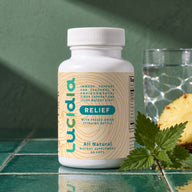
If you are already taking Lucidia, methylation support is worth considering alongside it. The connection is direct: the HNMT enzyme that clears histamine inside your cells requires SAMe, the primary methyl donor your methylation cycle produces. When methylation runs slowly, histamine clearance slows with it.
Lucidia handles the mast cell stabilization side (quercetin, reishi) and glutathione production (NAC). Methylation support handles the epigenetic and histamine-clearance side. They work on different parts of the same system.
The Dosage Reference
Methylation support — dosage reference
Methylfolate (5-MTHF)
400 - 5,000 mcg/day
Start at 400-800 mcg. Titrate based on homocysteine levels and symptoms. Avoid folic acid.
Methylcobalamin (B12)
500 - 3,000 mcg/day
Sublingual or capsule. Dual-form (methylcobalamin + adenosylcobalamin) covers both pathways.
Riboflavin 5'-phosphate (B2)
10 - 100 mg/day
MTHFR cofactor. May partly compensate for reduced enzyme activity. Higher doses may cause yellow urine (harmless).
TMG (trimethylglycine)
500 - 1,800 mg/day
Direct methyl donor. Bypasses MTHFR entirely via BHMT pathway. Take with food.
Where to start
Methylation is not a single-nutrient problem. It is a system that runs on multiple cofactors, and the best supplements address the whole pathway rather than one bottleneck.
For most people discovering MTHFR variants for the first time, Seeking Health Homocysteine Nutrients is the right starting point: moderate doses, all five nutrients, formulated by the person who literally wrote the book on MTHFR. If you need clinical-strength support, Thorne Methyl-Guard Plus has the highest potency with titratable dosing. For gentle daily maintenance, Seeking Health B Complex Plus covers methylated B vitamins without high-dose methylfolate.
Test your homocysteine before and after. Start low. Work with a practitioner if you can.
These statements have not been evaluated by the Food and Drug Administration. This product is not intended to diagnose, treat, cure, or prevent any disease.
References
- Lynch, B. (2018). Dirty Genes: A Breakthrough Program to Treat the Root Cause of Illness. HarperOne.
- Masterjohn, C. (2019). MTHFR and riboflavin: what the science actually says. chrismasterjohnphd.com.
- Stover, P. J. (2009). One-carbon metabolism–genome interactions in folate-associated pathologies. Journal of Nutrition, 139(12), 2402–2405.
- Wald, D. S., et al. (2002). Homocysteine and cardiovascular disease: evidence on causality from a meta-analysis. BMJ, 325(7374), 1202.
- Crider, K. S., et al. (2012). Folate and DNA methylation: a review of molecular mechanisms and the evidence for folate's role. Advances in Nutrition, 3(1), 21–38.
- McNulty, H., et al. (2006). Riboflavin lowers homocysteine in individuals homozygous for the MTHFR 677C→T polymorphism. Circulation, 113(1), 74–80.
Co-Founder & Wellness Director
MS Holistic Nutrition, BS Kinesiology. Specializes in functional nutrition, somatic practice, and women’s health. Co-founder of the REN School of Consciousness.
Continue reading
More in Methylation and detox →-
 Methylation and detox
What Is Methylation? A Beginner's Guide to Your Body's Master Switch
Artemis Therapeutics · 10 min -
 Methylation and detox
NAC vs. Glutathione Supplements: Which Is Better?
Kacey Moe, MS · 10 min -
 Methylation and detox
What Is NAC? The Overlooked Compound Behind Cellular Defense
Kacey Moe, MS · 8 min
Not sure where to start? Take the 3-minute quiz
Get new articles by email
New articles from Nathalie and Kacey. Unsubscribe anytime.

Lucidia
Daily histamine support, formulated by Nathalie and Kacey in their practice in 2009. Same five ingredients since.
★ 4.3 out of 5 stars from · 238 reviewsQuercetin, NAC, reishi, bromelain, nettle
$29.99Free shipping · 60 capsules
Subscribe and save 10%